
Knee Pain
Physiotherapy
Strong
Injurie
Beauty
Chiropractic
Massages
Get expert chiropractic care in Orem, Utah with Dr. Mattila.

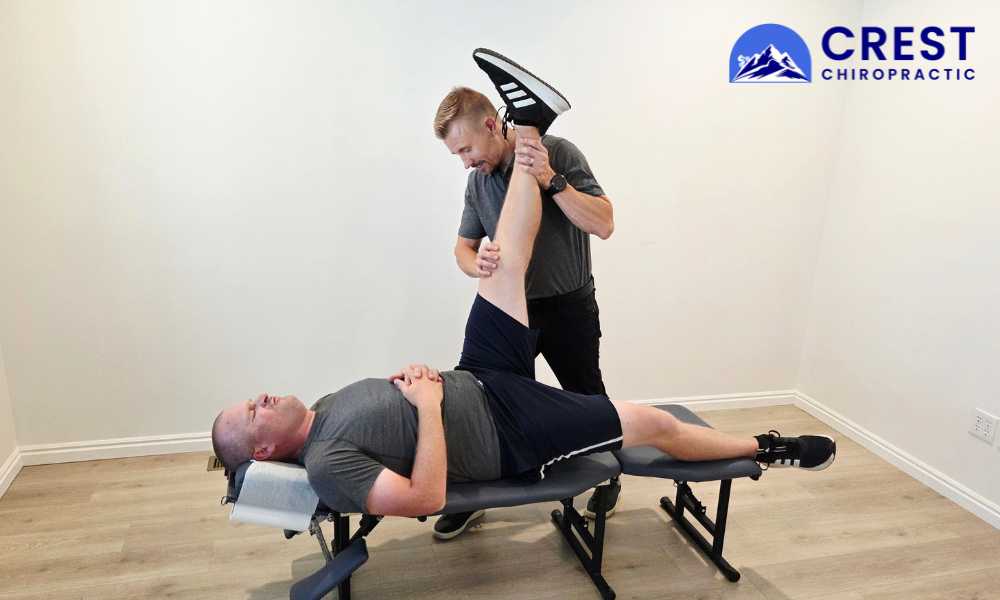
Lower back pain is one of the most common reasons people visit a doctor each year, and it can get in the way of everything from sports and travel to simply getting through a workday. At Crest Chiropractic, we believe that understanding the anatomy behind back pain is the first step toward preventing it, treating it, and getting back to the activities you love.
Your lower back is made up of the spine, pelvis, muscles, ligaments, and nerves working together. The spine consists of vertebrae separated by shock-absorbing discs, with the spinal cord running through the center and nerves branching out through small openings called foramina. Ligaments hold these bones together for stability, while muscles provide strength, movement, and protection.
Key muscles supporting the lower back include the erector spinae, multifidus, quadratus lumborum, and latissimus dorsi, working alongside the abdominal muscles, iliopsoas, and glutes. Together, these muscle groups stabilize the spine and power everyday movement.
Back pain often develops when muscles weaken from disuse or when one muscle group overcompensates for another. A common example is the hamstrings taking over for underactive glutes, creating imbalance and lower back strain. Targeted exercises, such as glute bridges and cross-crawl movements, help re-activate inhibited muscles and restore proper movement patterns.
Ligaments such as the anterior and posterior longitudinal ligaments, ligamentum flavum, and iliolumbar ligaments keep the spine stable and limit excessive movement. When stretched beyond their normal range, a lower back sprain can result, often causing stiffness and poor posture.
Early treatment typically includes ice to reduce inflammation, gentle chiropractic adjustments to restore spinal mobility, and progressive exercise to rebuild strength.
Nerves in the lower back control sensation and movement in the hips, legs, and feet. When a nerve becomes compressed, the result can be a pinched nerve or sciatica — pain, numbness, or tingling that radiates from the hip down through the leg. Chiropractic care, combined with focused stretching, can relieve pressure on the affected nerve and reduce symptoms.
Intervertebral discs act as shock absorbers between the vertebrae. When a disc bulges or herniates, it can cause pain, numbness, tingling, or a burning sensation. A simple at-home remedy— lying on your back with knees bent and feet propped on a chair — can relieve pressure and ease discomfort. Many disc injuries respond well to chiropractic care and non-surgical spinal decompression therapy.
Lower back pain rarely has a single cause — it's usually a combination of muscle imbalance, ligament strain, nerve irritation, or disc stress. At Crest Chiropractic, we evaluate each of these factors to build a treatment plan tailored to you, combining adjustments, targeted exercise, and non-surgical therapies to relieve pain and restore function.
Common approaches we use to treat lower back pain include:
• Gentle chiropractic adjustments to restore spinal mobility
• Targeted strengthening exercises for the core and glutes
• Nerve-focused stretching for sciatica relief
• Non-surgical spinal decompression for disc-related pain
Don't let lower back pain keep you on the sidelines. Schedule a visit with Crest Chiropractic today and take the first step toward lasting relief.
We proudly serve patients in Orem, Lindon, Vineyard, Pleasant Grove, Alpine, Cedar Hills, and throughout Utah County.
Schedule your New Patient Appointment Today by clicking here or call us directly at 801-701-8100.


Begin your path to wellness with our $99 New Patient Special, which includes a complete consultation, chiropractic examination, x-ray imaging (if needed) and your first treatment.
.jpg)
Find the latest on chiropractic care, shockwave therapy, spinal decompression, and treatments for neck, back, shoulder, and knee pain.
Read The Blog
Monday
Tuesday
Wednesday
Thursday
Friday
Saturday
Sunday


.jpg)
.jpg)